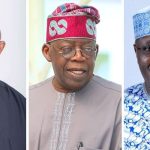
2027 Bombshell: Omo-Agege Backs Peter Obi for President, Says Tinubu’s Reforms Must Continue
Former Deputy Senate President insists fuel subsidy removal and naira floatation were necessary, but believes Nigerians trust Obi more to deliver results.
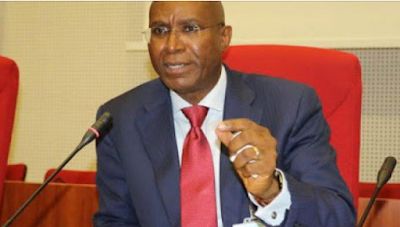
In a surprising political twist ahead of the 2027 presidential election, former Deputy Senate President Ovie Omo-Agege has thrown his weight behind Labour Party’s Peter Obi while maintaining strong support for the economic reforms introduced by President Bola Tinubu. The former APC chieftain says the policies are not the problem, but that Nigerians may have greater confidence in Obi’s ability to make them work.
Former Deputy Senate President Ovie Omo-Agege has stirred political debate after declaring support for Labour Party presidential candidate Peter Obi ahead of the 2027 election, while simultaneously endorsing the key economic reforms introduced by President Bola Tinubu’s administration.
The former Delta Central senator made the revelation during an interview on ARISE TV’s The Morning Show on Wednesday, where he explained his political realignment following his recent departure from the All Progressives Congress (APC).
Omo-Agege dismissed suggestions that his endorsement of Obi contradicts his previous support for the Tinubu administration’s economic policies.
According to him, his position on the reforms remains unchanged despite switching political allegiance.
“I was a member of the APC. I never left the APC; the party left me and left my over 230,000 supporters in Delta State,” he said.
‘I Still Support Tinubu’s Economic Reforms’
The former Deputy Senate President said he continues to believe that some of the most controversial decisions taken by the Tinubu administration were necessary for Nigeria’s long-term economic stability.
He specifically cited the removal of fuel subsidy and the floating of the naira as reforms he still strongly supports.
“When Mr President came up with the economic policies, most especially the naira floatation and subsidy removal, these are policies I supported and continue to support,” Omo-Agege stated.
His comments come at a time when both policies remain subjects of intense national debate due to their impact on inflation, fuel prices, and the cost of living.
Why He’s Choosing Obi
Despite supporting the reforms, Omo-Agege argued that the policies should not be viewed as exclusive to President Tinubu or the APC.
He pointed out that Peter Obi had also advocated similar economic measures during the 2023 presidential campaign.
“Even though these policies were espoused by Mr President, which I support, the same policies were also supported by Peter Obi,” he said.
According to him, the key difference lies in public perception and confidence.
Omo-Agege said he believes many Nigerians would be more willing to embrace the reforms if they were being implemented by Obi.
“I just believe that under the new platform I’ve gone to, these policies will continue and the people, the majority of Nigerians who have issues with those policies, would feel more confident because they are more comfortable and trust Peter Obi that he will make these policies work more than Mr President could have done.”
‘The Policies Are Not Bad’
The former APC leader stressed that his support for Obi should not be interpreted as a rejection of the economic reforms.
Instead, he argued that the debate should focus on implementation rather than the policies themselves.
“The policies are not bad policies,” Omo-Agege added.
His remarks are expected to fuel fresh conversations about political realignments ahead of the 2027 elections, especially as opposition parties continue efforts to build momentum against the ruling APC.
The endorsement also highlights an emerging narrative in Nigeria’s political landscape, where support for economic reforms is increasingly being separated from loyalty to the politicians who introduced them.
With the 2027 race already beginning to take shape, Omo-Agege’s comments could further intensify discussions about potential alliances, voter confidence, and the future direction of the country’s economic policies.