Jihadist Blockade Forces Bamako Residents to Spend Eid Away From Home
Travel disruptions, rising sheep prices, fuel shortages and power outages overshadow Eid celebrations in Mali’s capital.
A jihadist blockade around Mali’s capital has disrupted Eid travel plans for thousands of residents, while transport restrictions, livestock shortages, fuel scarcity and power outages deepen hardship ahead of the celebrations.
Thousands of residents of Bamako, Mali’s capital, are facing an unusual Eid celebration this year as insecurity and transport disruptions have prevented many from travelling to reunite with their families.
Since late April, fighters linked to Al-Qaeda’s Sahel branch have imposed a partial blockade on major access routes into Bamako, disrupting movement and affecting economic activities ahead of the Muslim festival of Eid al-Adha, locally known as Tabaski.
For many residents, the restrictions have brought an end to long-standing family traditions.
Alpha Amadou, a resident originally from Mopti, said he would remain in Bamako for Eid for the first time in three decades after abandoning plans to travel home due to security concerns.
Transport operators also reported major setbacks, explaining that attacks on buses and persistent fuel shortages have forced many companies to suspend operations during what is usually one of the busiest travel periods of the year.
Industry sources noted that tens of thousands of passengers typically travel from Bamako to other regions for the celebration, but this year movement has slowed dramatically.
Private travellers have also avoided the roads amid fears of attacks, with many families choosing to remain in the capital rather than risk long-distance journeys.
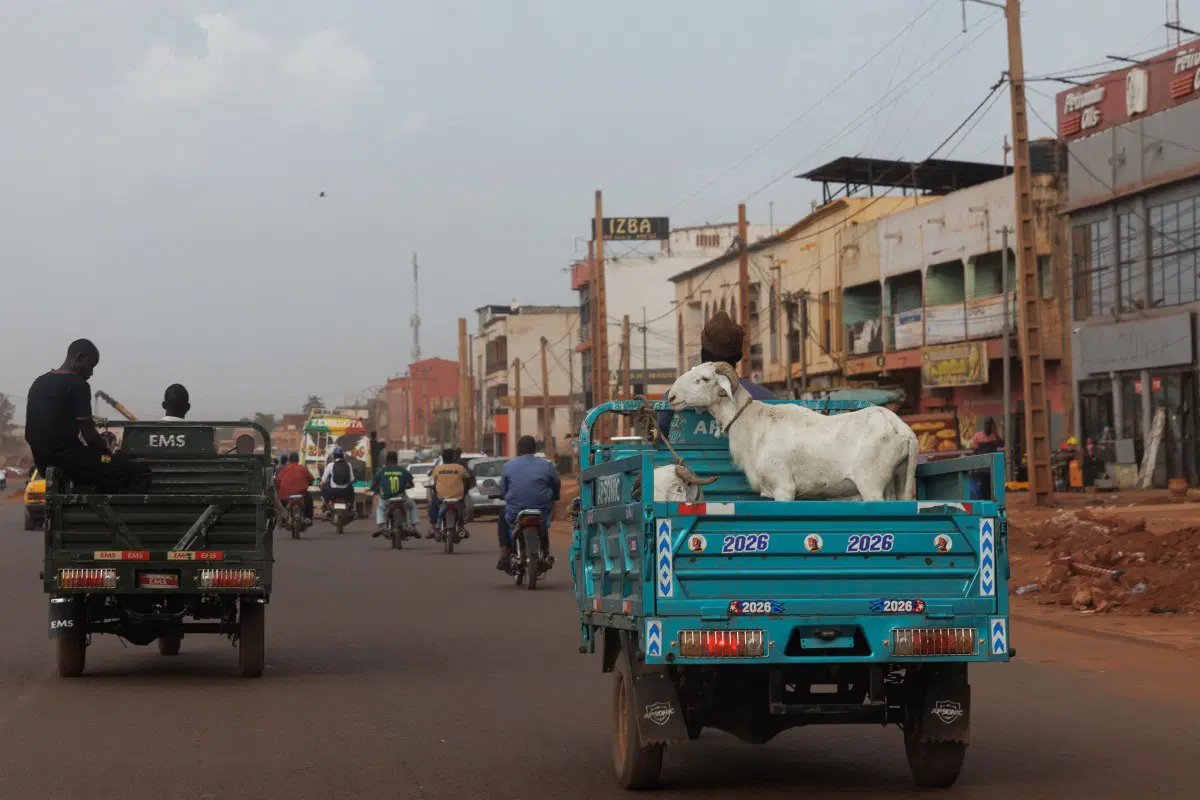
The disruption has extended to livestock supply, creating shortages of sheep required for the traditional Eid sacrifice.
Transporters said the cost of moving animals into Bamako has risen sharply, contributing to steep increases in market prices and making sheep increasingly unaffordable for many households.
Vendors reported significant declines in available livestock, while consumers complained that prices had multiplied several times compared to previous years.
Beyond transport and food supply, residents are also dealing with prolonged electricity outages and shortages of drinking water.
Power cuts have disrupted businesses, including tailors preparing traditional Eid clothing, while families expressed concerns about preserving food during the festivities.
Authorities have announced the arrival of hundreds of fuel tankers in an effort to ease shortages, but for many residents, plans to return home for Eid have already been cancelled.