Nigeria’s Economy Fractured by 66 Years of Poor Policy Choices, Not Just Corruption — Orji Kalu
Senator says decades of weak planning, oil dependence, and inconsistent policies—not only corruption—are responsible for Nigeria’s economic struggles
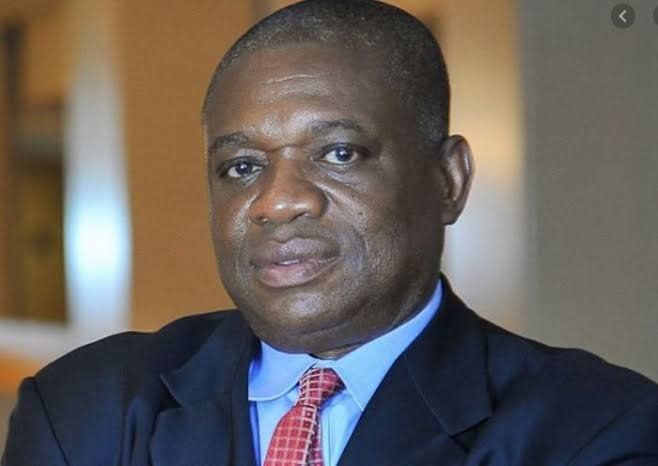
Senator Orji Uzor Kalu has argued that Nigeria’s economic challenges stem from 66 years of repeated policy mistakes by successive leaders, warning that over-reliance on oil and neglect of key sectors have done deeper damage than corruption alone.
Senator Orji Uzor Kalu has said Nigeria’s economic problems cannot be blamed solely on corruption, insisting that decades of poor policy decisions and weak economic planning have caused deeper structural damage.
The former Governor of Abia State described the popular narrative that corruption is the main cause of Nigeria’s economic decline as misleading, arguing that it has overshadowed long-standing systemic failures.
Kalu, who represents Abia North in the Senate, said successive governments—military and civilian alike—contributed to what he called a “66-year pattern of short-sighted economic choices” that weakened the country’s foundations.
He explained that Nigeria’s heavy dependence on oil revenue led to the neglect of key sectors such as agriculture, manufacturing, and technology, which once played a stronger role in the economy.
According to him, this over-reliance left the country vulnerable to global oil price shocks, exposing structural weaknesses whenever revenues declined.
“When global oil markets inevitably crashed, the hidden structural rot was exposed, leaving local industries crippled and the naira highly vulnerable,” he said.
Kalu added that poor investment in education, weak infrastructure, inconsistent policies, and excessive import dependence have all contributed to the country’s current economic reality.
He also criticized what he described as a national culture that prioritizes consumption over production, saying it has worsened long-term development challenges.
The senator noted that many of Nigeria’s problems are rarely addressed openly, including policy instability, poor maintenance culture, and divisions that sometimes overshadow competence in governance decisions.
He stressed that the country’s economic condition is the result of accumulated decisions over decades rather than the failure of any single administration.
“Recognising this reality is not about assigning blame, it is about learning from the past so that better choices can be made for the future,” he said.
Despite his criticism, Kalu maintained that Nigeria still has strong potential due to its human and natural resources, urging leaders to adopt more honest and strategic approaches to governance.
He concluded that meaningful progress would require accountability, long-term planning, and policies that encourage productivity and innovation across all sectors.






![Taylor Swift - Red (Taylor's Version) [2 CD]…](https://ancity.com.ng/wp-content/uploads/2026/05/Taylor-Swift-Red-Taylors-Version-2-CD…-150x150.jpg "Man Jailed 15 Years Over Foiled Plot to Attack Taylor Swift Vienna Concert")